



LPD8806 Pixel Protocol
A two-wire clocked RGB pixel IC using separate data and clock lines for timing-tolerant 8-bit control at 5V to 12V.
Specifications
| Specification | Detail |
|---|---|
| Clock Type | Clocked |
| Color Resolution | 8 Bits |
| Physical Package | SOP16 |
| RGB | Yes |
| RGBW | No |
| Output Pixel Voltage | 5 - 12V |
| PWM Rate | 4000Hz |
| Suitable Camera | Up to 134fps |
| Redundant Data Line | No |
Strengths
- Clocked two-wire operation (separate DATA and CLOCK) latches data against an external clock, so it tolerates timing variation better than self-clocked single-wire chips, which has traditionally helped on longer runs.
- 8-bit per-channel resolution delivers standard 24-bit RGB colour, adequate for smooth gradients and general pixel-mapping work.
- Wide 5V to 12V output pixel supply range gives integrators flexibility, and higher-voltage strips reduce voltage-drop and injection headaches over distance.
Limitations
- Being clocked, it needs a second conductor for the CLOCK line: that adds wiring and cost, creates another connection that can fail, and a high-frequency clock line radiates EMI that can interfere with sensitive installations. The market is trending toward data-only single-wire chips to avoid both issues, so the timing-tolerance benefit comes at a real cost rather than being simply better.
- RGB only with no white channel (RGBW: No), so it cannot produce a dedicated calibrated white and is less suited to tunable-white or high-CRI white work.
- No redundant data line, so a single broken pixel or joint kills every pixel downstream with no failover path.
- The 4000Hz PWM rate is comfortably flicker-free for the rated camera use (up to 134fps, roughly 30 PWM cycles per frame), so it is camera-safe for typical broadcast and video work, but it does not offer the very high refresh headroom of newer data-only parts if a project later demands it.
Overview
LPD8806 is a clocked RGB pixel driver: each IC takes a separate DATA line and a dedicated CLOCK line, so data is latched against the controller's clock rather than self-timed. That two-wire scheme relaxes signal-timing tolerances along a run, which historically made it forgiving over longer strips. Each channel carries 8-bit resolution for 24-bit RGB colour, the parts run across a 5V to 12V supply range, and the SOP16 package houses one controller per pixel. It is RGB only, with no white channel and no redundant data line.
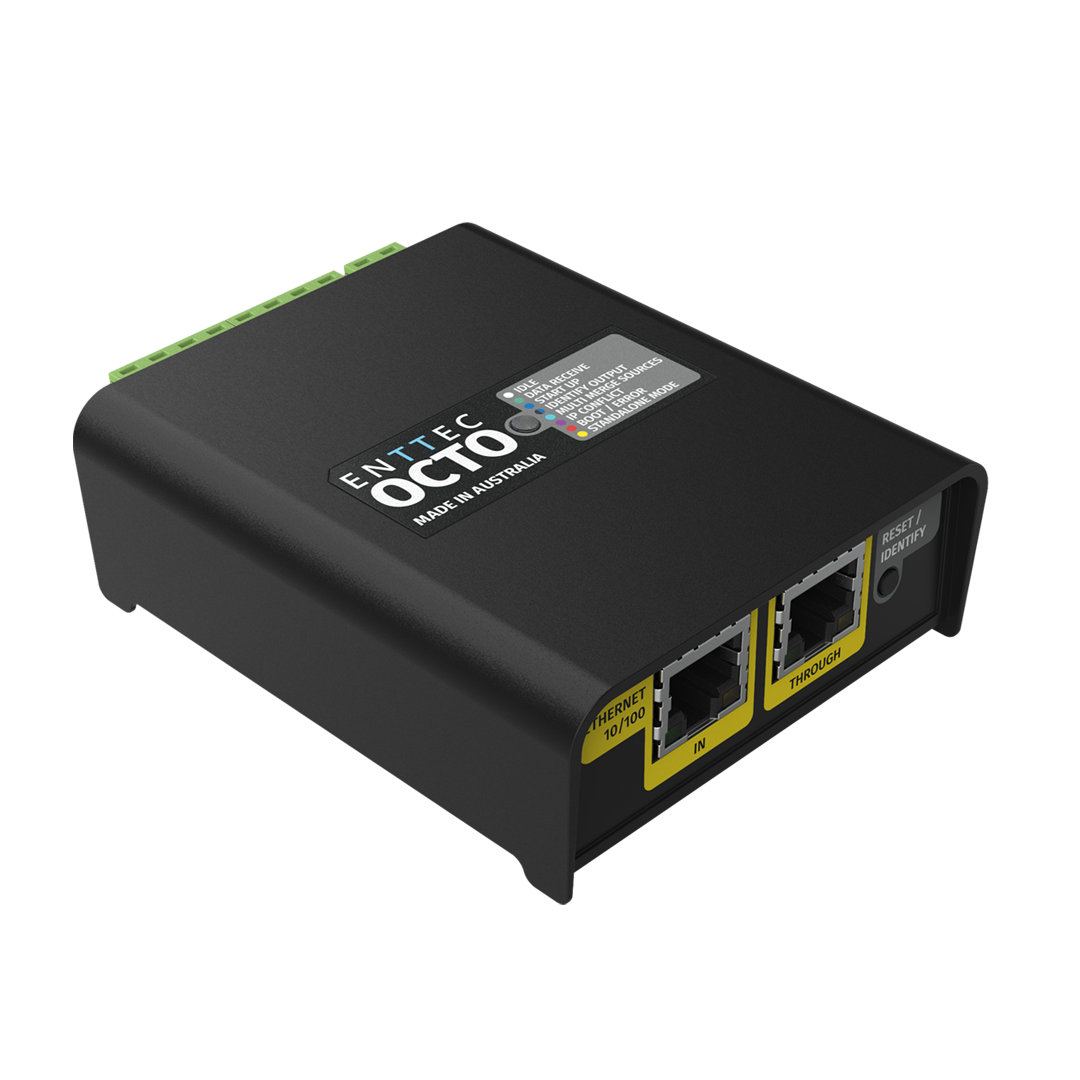
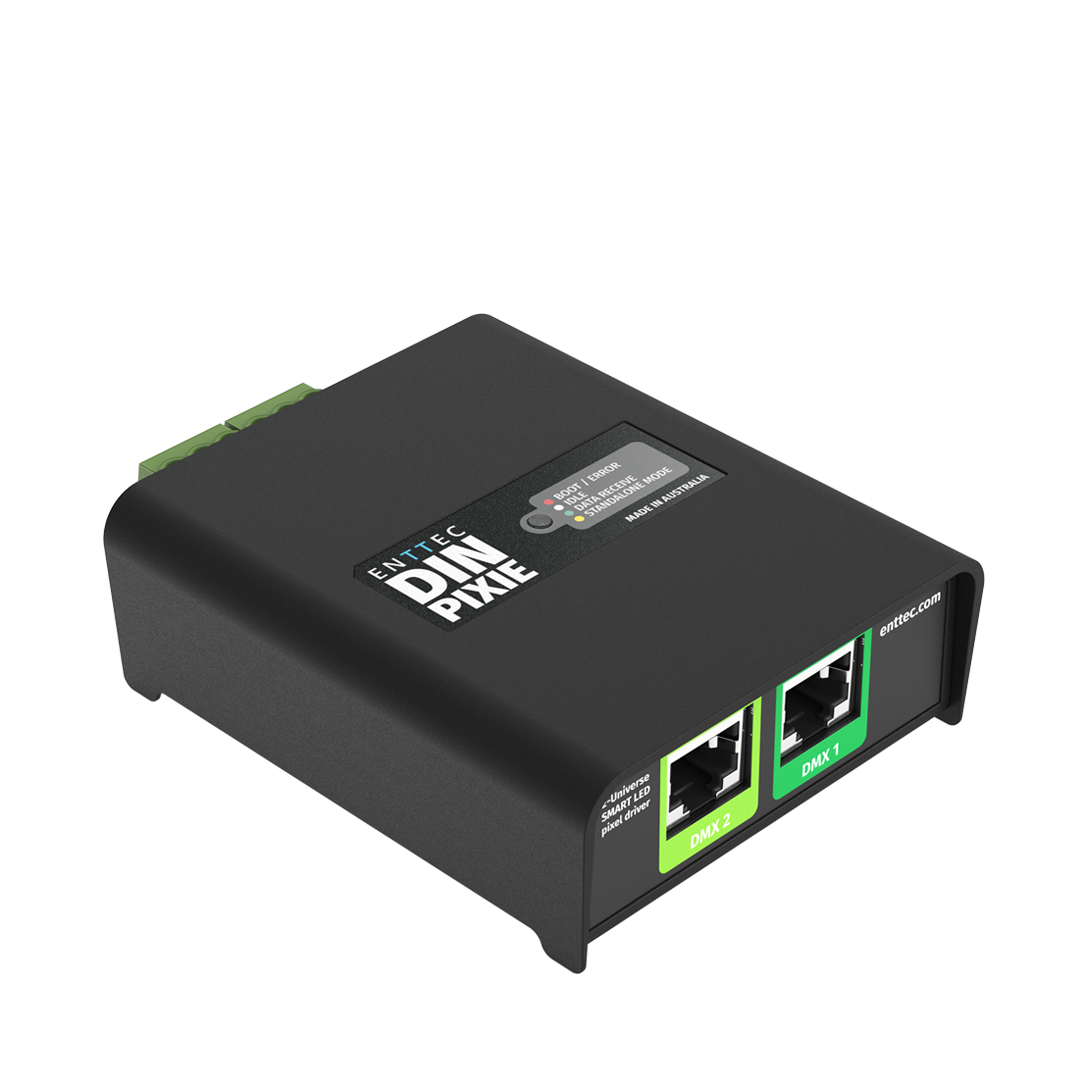
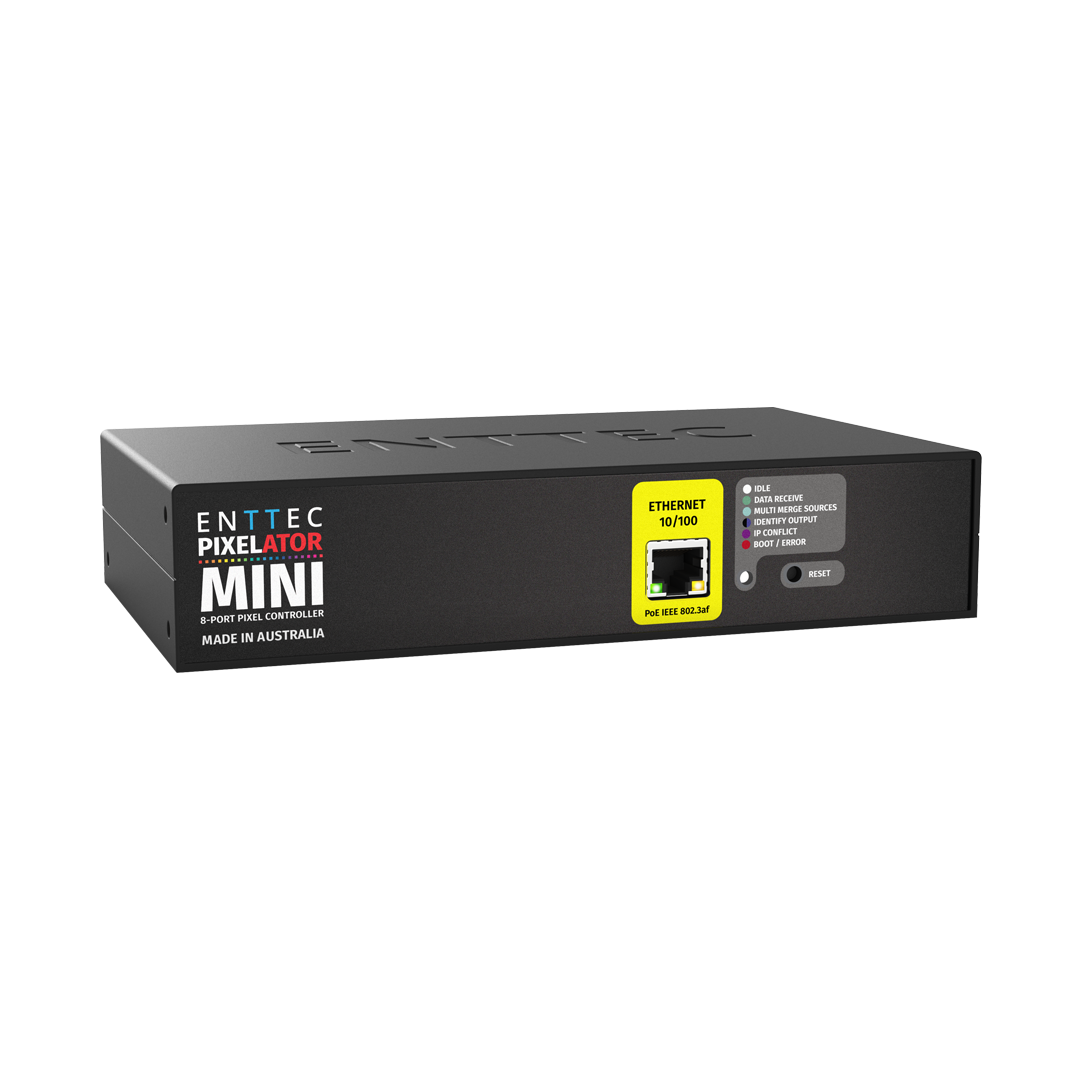
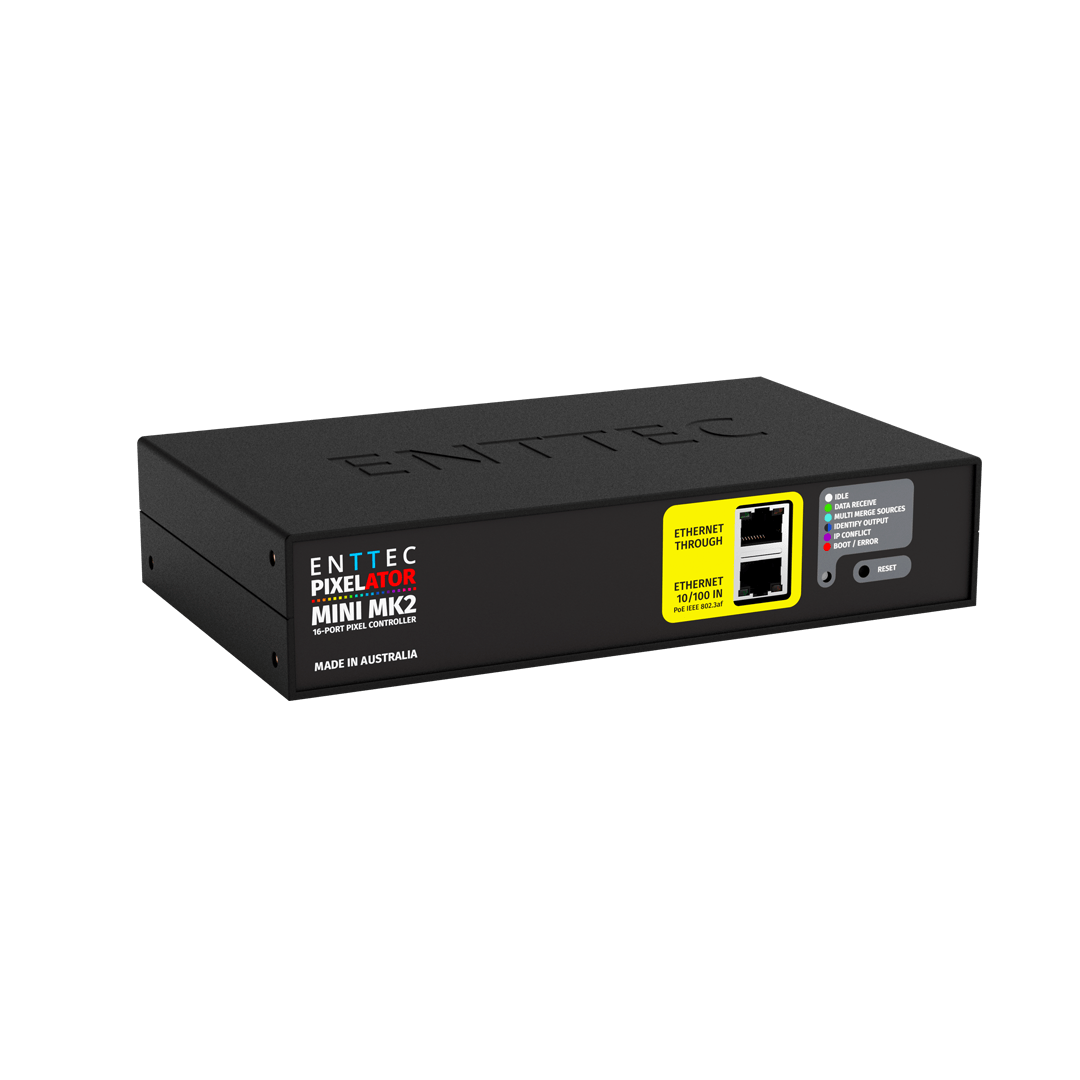
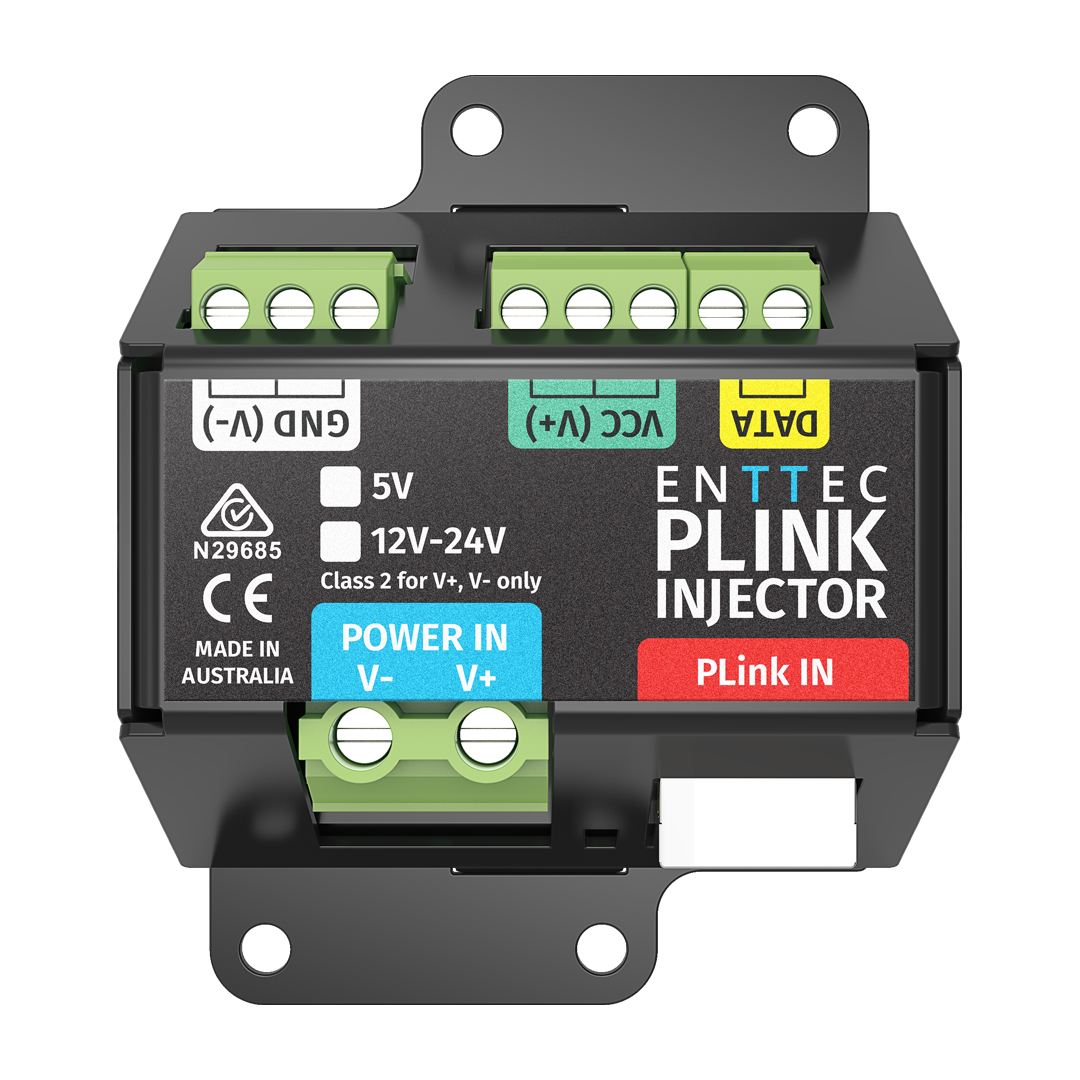
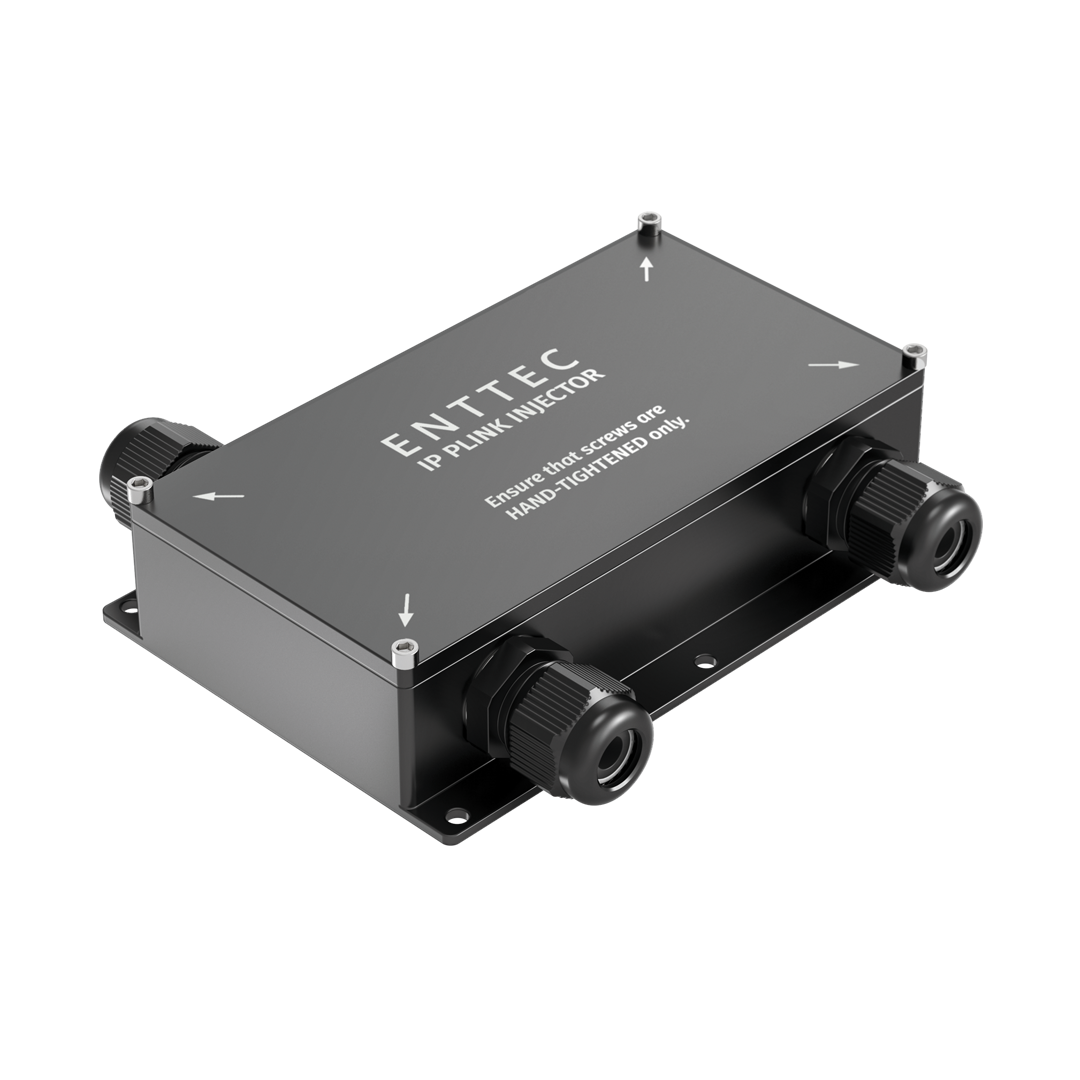
Mapping an installation? ELM, ENTTEC's free LED pixel mapping software, drives the controllers above over Art-Net and sACN, from a single fixture to building-scale maps.
ENTTEC has been engineering lighting control in Australia since 1999, and shipping LED pixel controllers since the original Pixelator in 2014.