



LPD8803 Pixel Protocol
A two-wire clocked RGB pixel protocol using separate data and clock lines, with 8-bit per-channel colour and a 5V to 12V supply range.
Specifications
| Specification | Detail |
|---|---|
| Clock Type | Clocked |
| Color Resolution | 8 Bits |
| Physical Package | SOP16 |
| RGB | Yes |
| RGBW | No |
| Output Pixel Voltage | 5 - 12V |
| PWM Rate | 4000Hz |
| Suitable Camera | Up to 134fps |
| Redundant Data Line | No |
Strengths
- The separate clock line makes data timing tolerant: bits are latched on the clock edge rather than depending on tightly held self-clocked pulse widths, which eases longer runs and works with less timing-critical controllers.
- 8 bits per channel gives full 24-bit RGB, adequate for smooth gradients and general pixel-mapping work.
- Wide 5V to 12V supply range: running at 12V reduces voltage drop and the frequency of power injection on longer runs compared with 5V-only chips.
Limitations
- Being clocked, it needs a second (clock) conductor, which adds wiring and cost and another point of failure; a high-frequency clock line also radiates EMI that can cause interference in sensitive installations, and the market is trending toward data-only single-wire chips to avoid both. Its timing tolerance is a genuine advantage but comes at that cost, so clocked is not simply better.
- Colour depth is fixed at 8 bits per channel with no RGBW option: no dedicated white channel and no higher bit depth for very fine low-end dimming.
- No redundant data line: a single failed pixel or broken connection halts the entire downstream chain with no automatic bypass.
Overview
The LPD8803 is a two-wire, clocked RGB pixel protocol: each IC takes a separate data line and a dedicated clock line rather than self-clocking on a single wire. Every pixel carries an integrated driver that handles 8 bits per channel (24-bit RGB) and shifts data down the chain in an SPI-like fashion. Parts operate across a 5V to 12V supply in a SOP16 package, with a 4000Hz PWM output that stays comfortably flicker-free for cameras up to 134fps. There is no redundant data line, so a single break stops everything downstream.
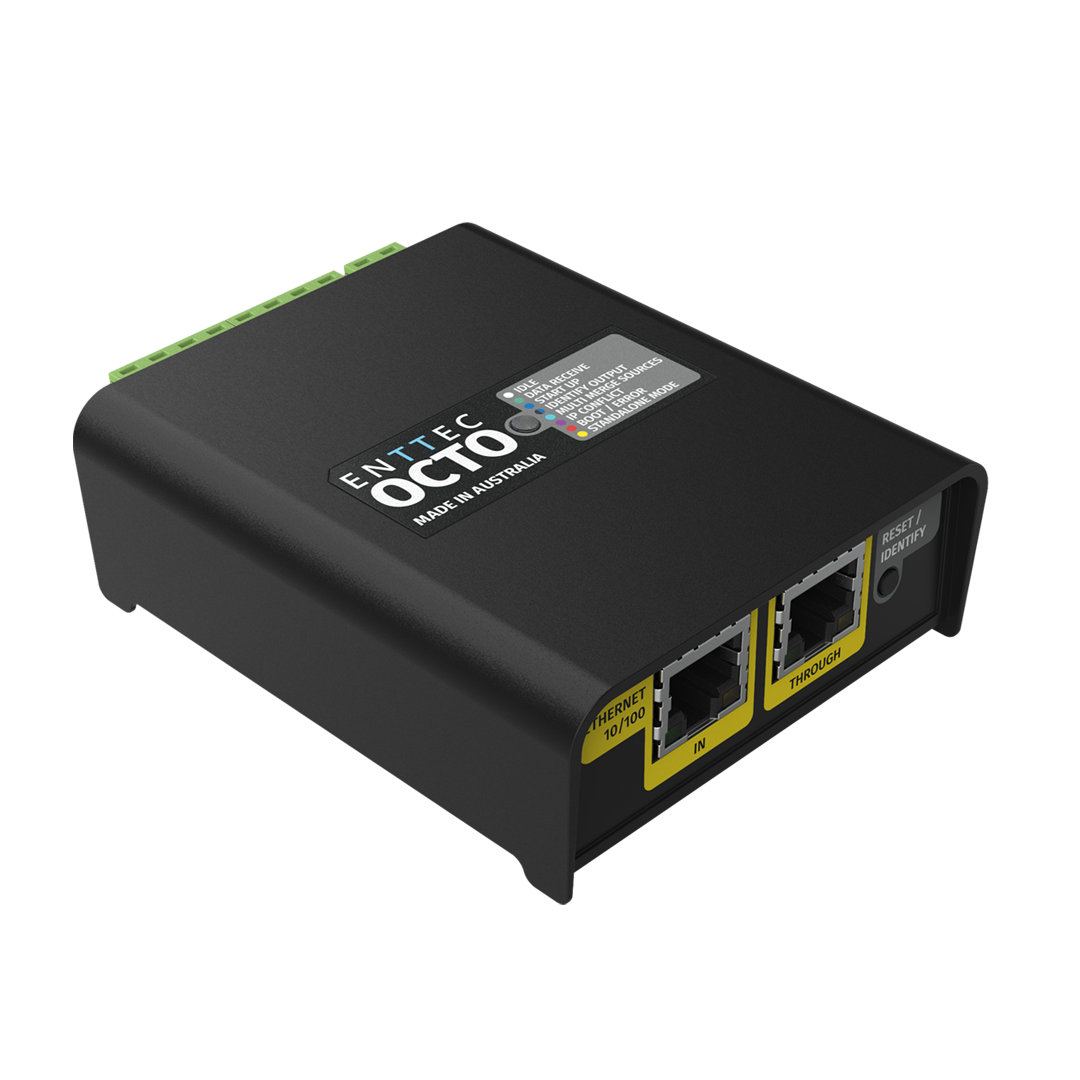
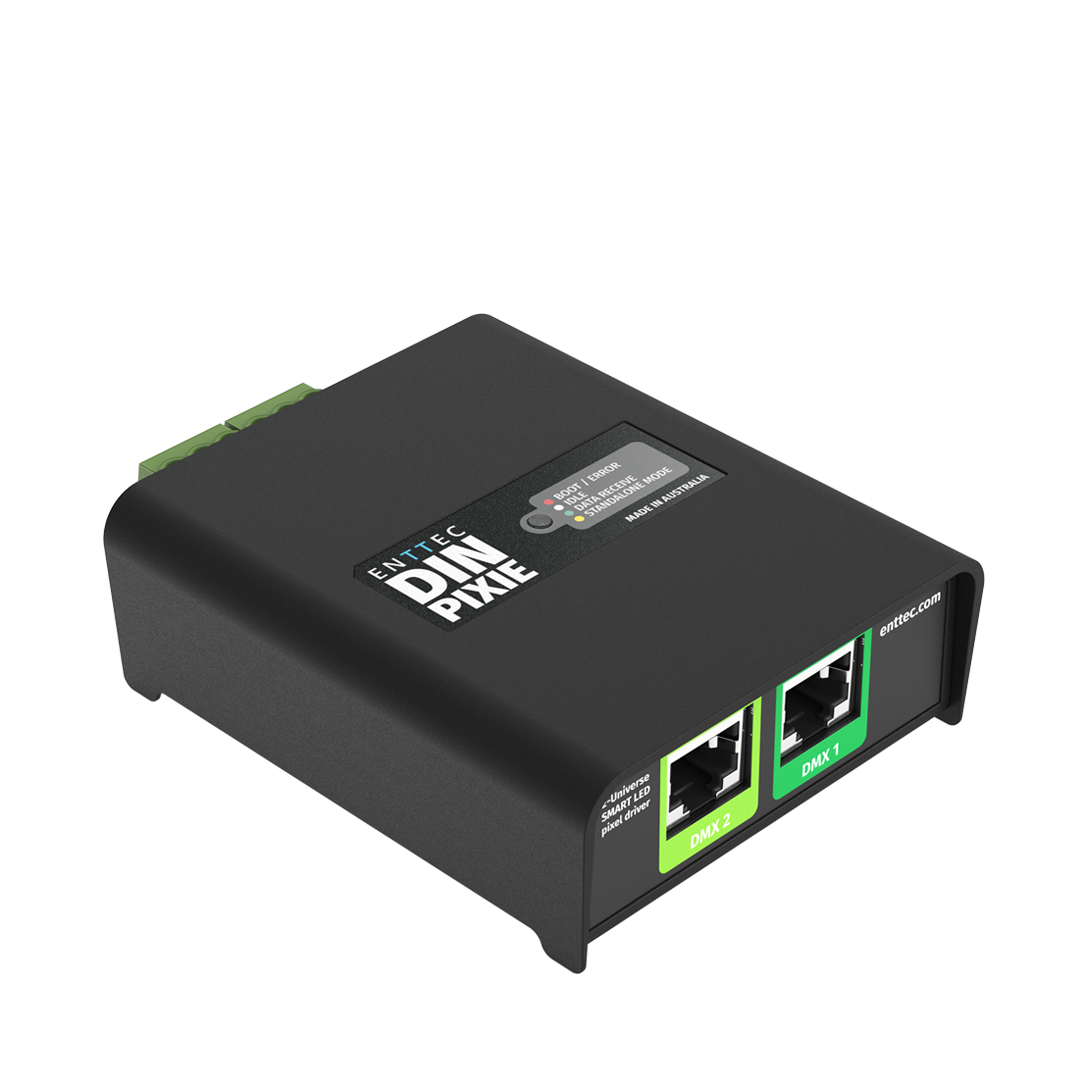
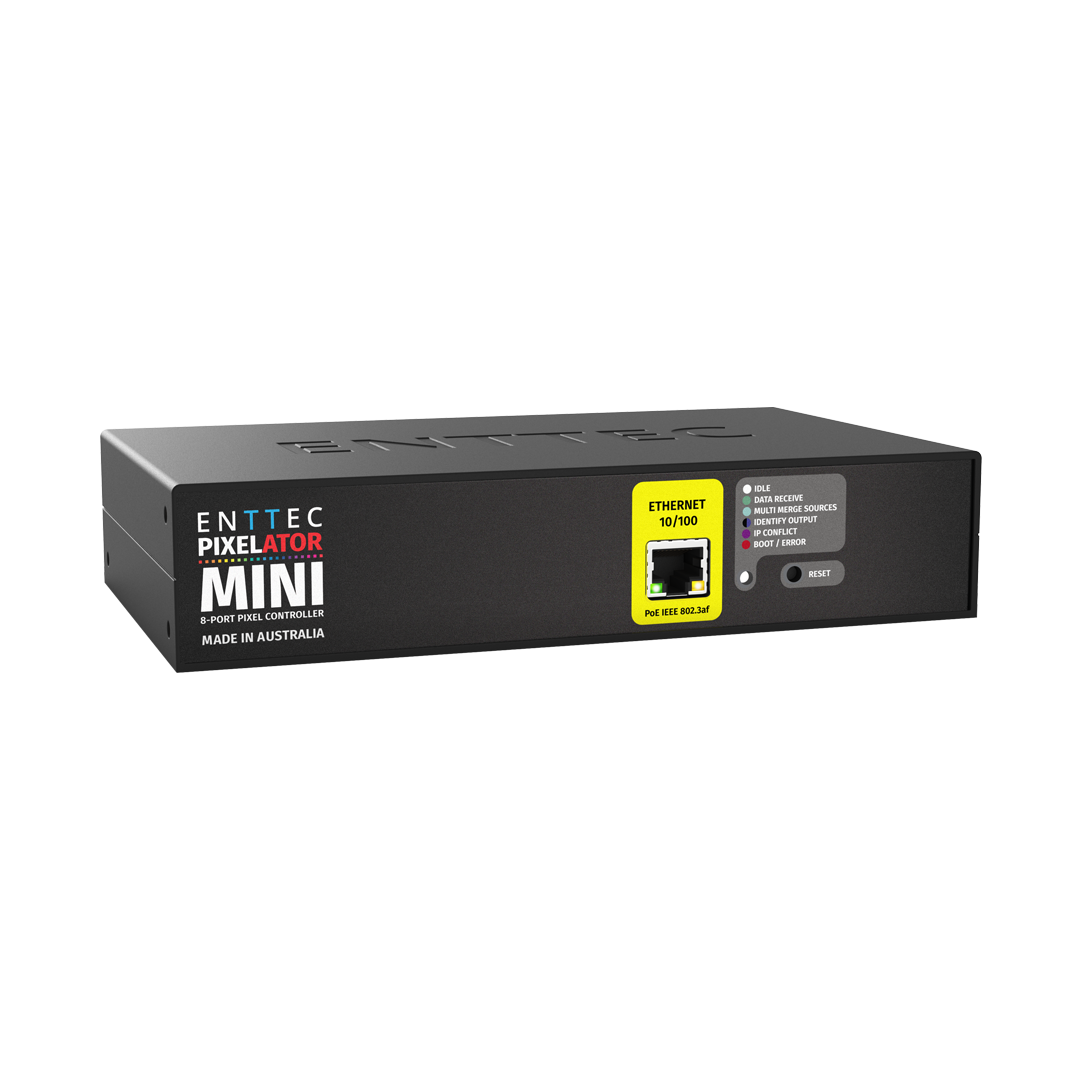
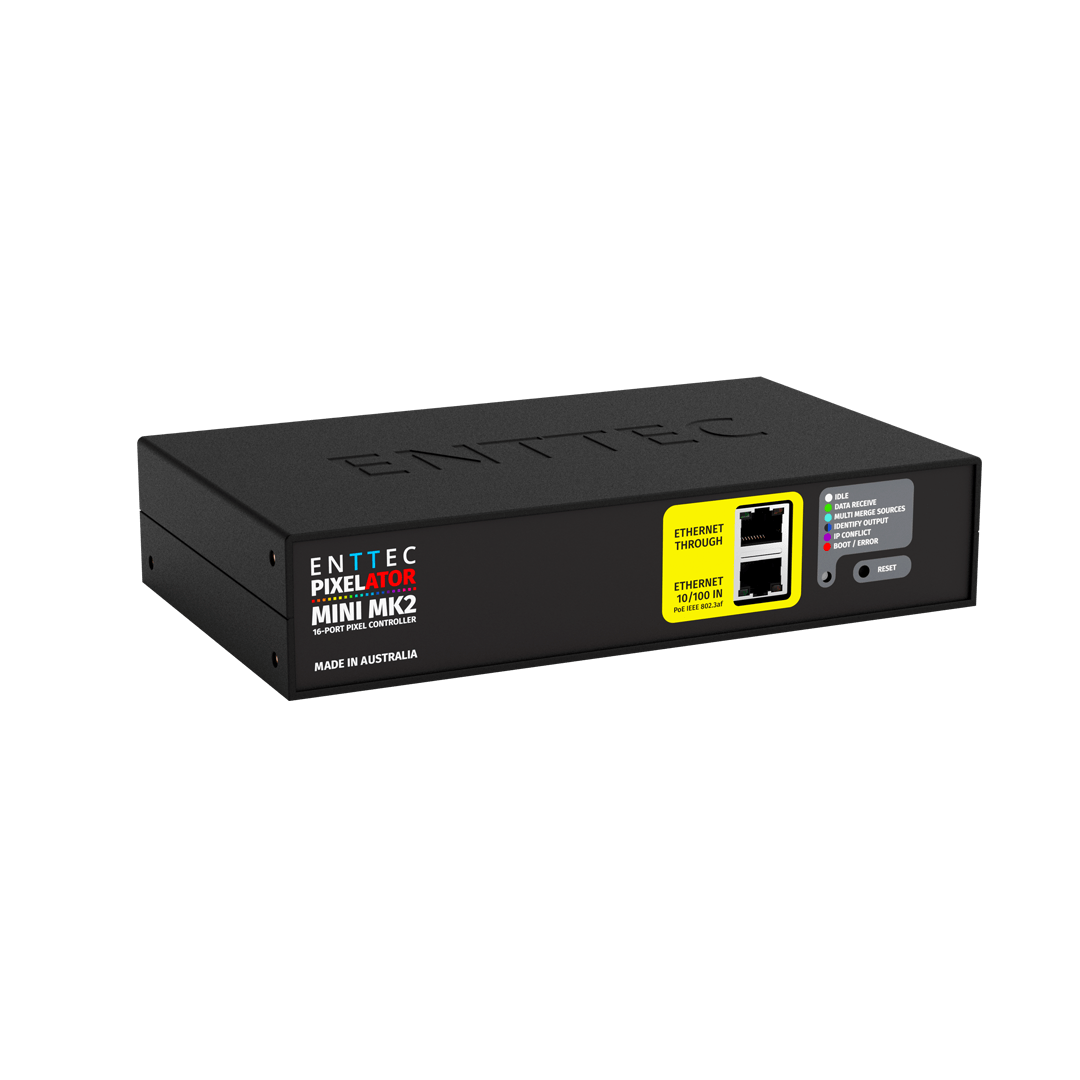
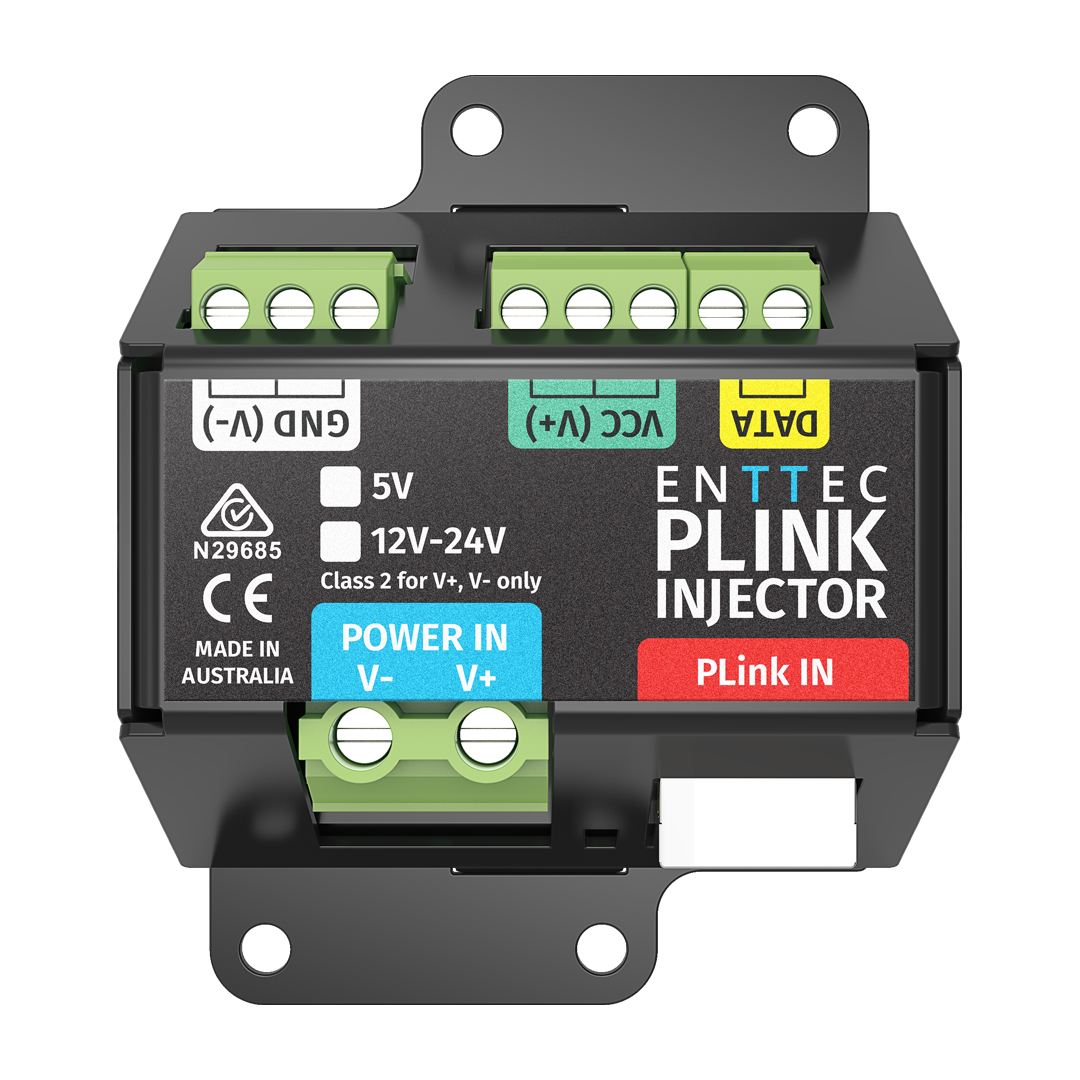
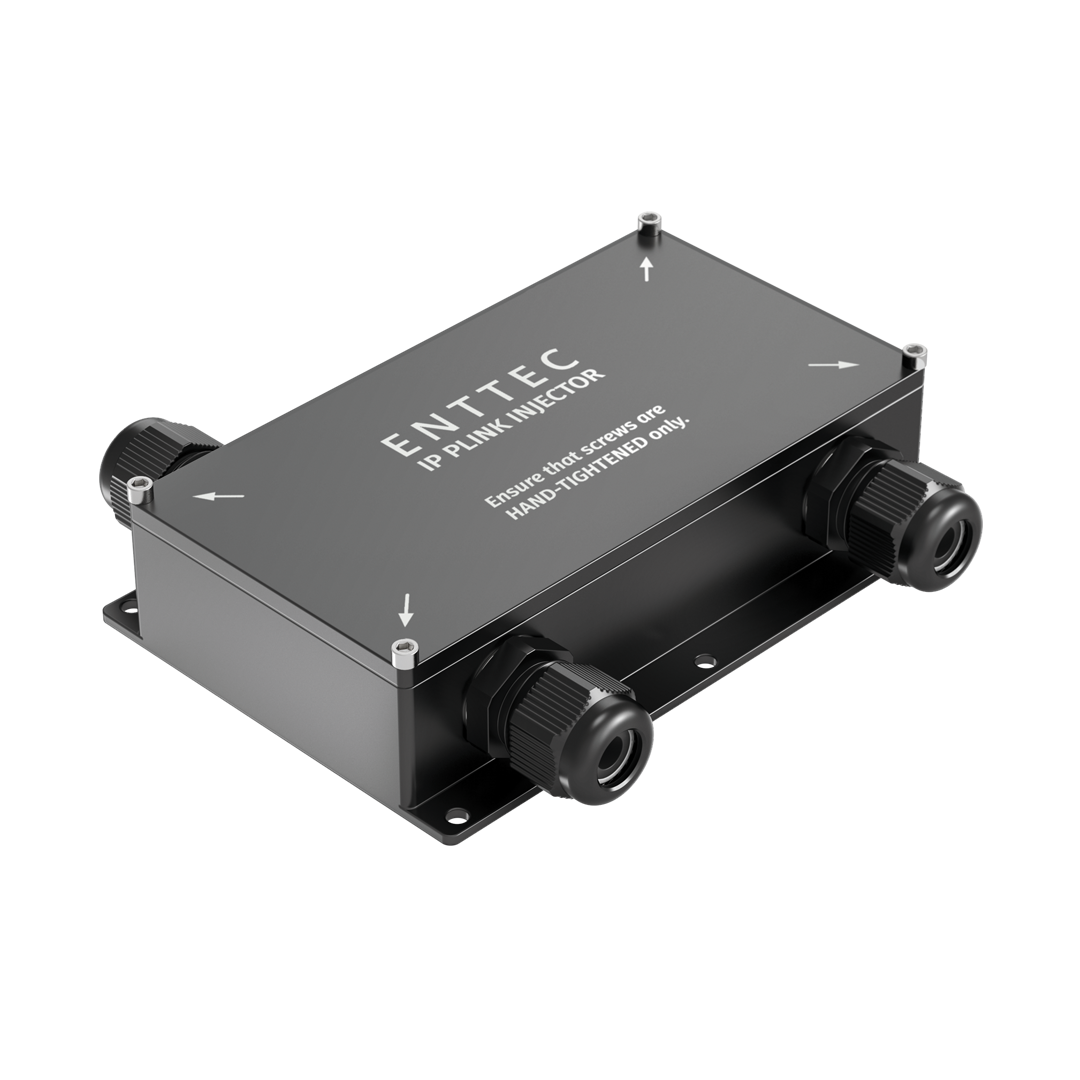
Mapping an installation? ELM, ENTTEC's free LED pixel mapping software, drives the controllers above over Art-Net and sACN, from a single fixture to building-scale maps.
ENTTEC has been engineering lighting control in Australia since 1999, and shipping LED pixel controllers since the original Pixelator in 2014.